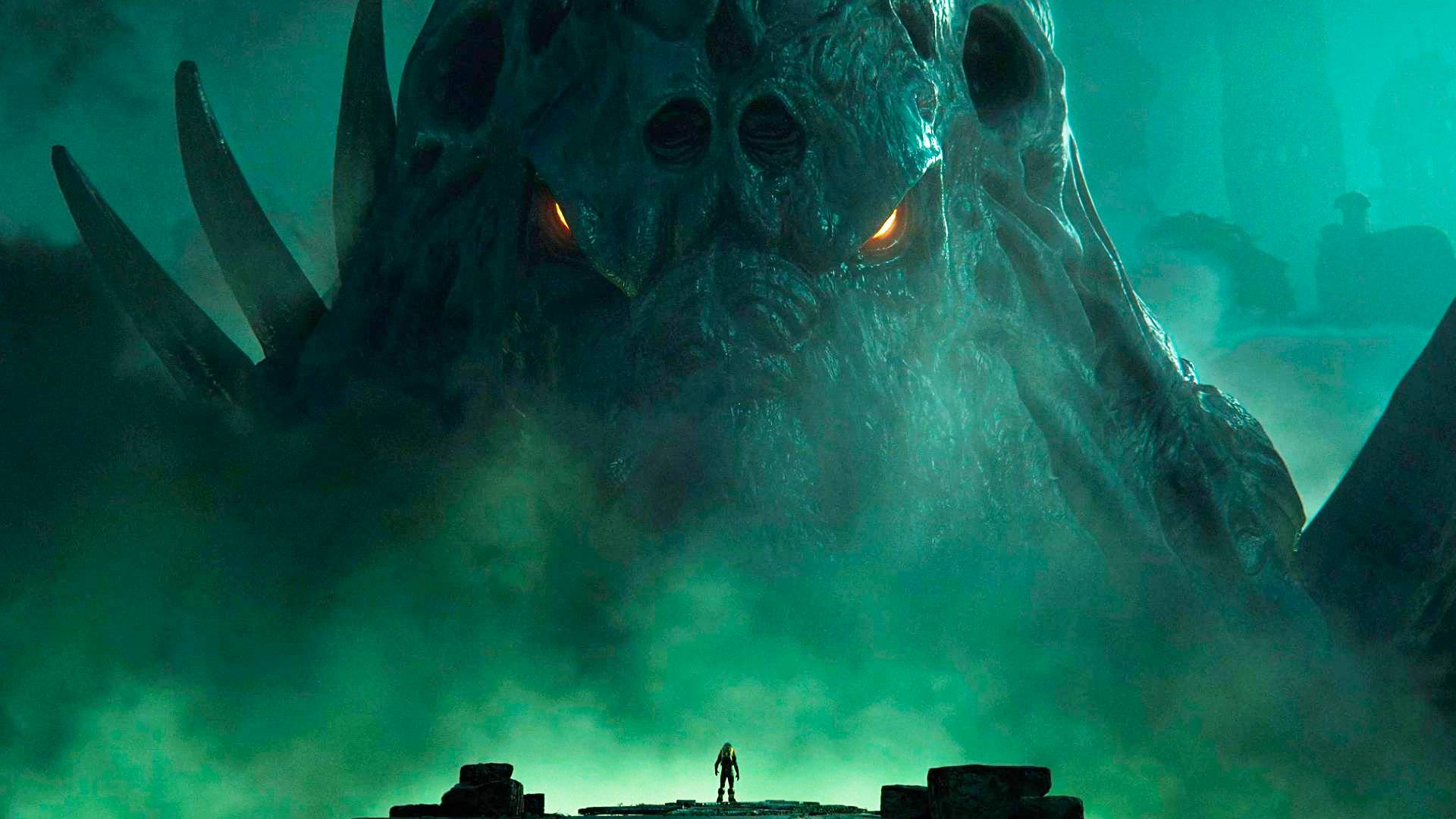
Cthulhu:
The Cosmic Abyss

First Person Investigation
Level Designer at BigBadWolf
PC - Consoles
Unreal Engine 5
The Challenges
How to design a quest that introduces game mechanics while also serving as a full-fledged investigative quest.
With Cthulhu: The Cosmic Abyss, the goal was to build on the studio’s core identity, so naturally it was a investigation game but with a stronger emphasis on gameplay. The game is more of an investigation game than a narrative-driven one, unlike the studio’s previous titles. The budget was smaller compared to other projects I’ve worked on, which brought its own set of challenges.
I was in charge of the game’s second quest: The Excavation. Since the first quest served as an introduction, I had to take responsibility for three-quarters of the game’s tutorials.
To fully understand how the level was designed, you need to distinguish between the level itself, the space where the player will play, and the quest.
I was given a "quest outline" that described most of the important informations concerning the quest including an idea of the objectives and the critic and eureka path (That I will explain later)
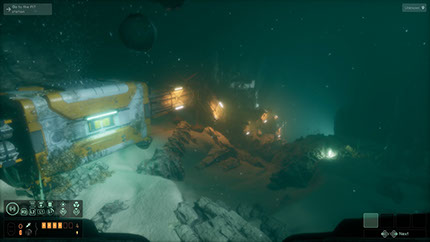
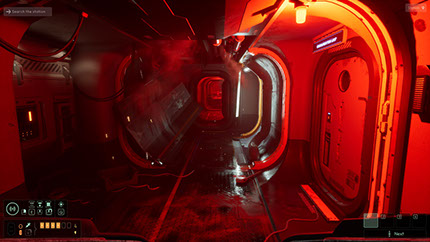
Working in tandem with Manon Durrieu and Bastien Bagneris, the narrative designer and environnement artist on the quest, we presented several proposals to focus on the investigation that was set aside in favor of the narrative.
This quest required a partially linear quest design because of the remaining game mechanics we needed to introduce after the introduction, which is the first level.
We were compelled to build around the narrative and staging choices that had already been planned for the quest. This led to major structural issues, such as the constant back-and-forth between the station and the maze.
Quest objectives and resolutions were also established, even though this created challenges in terms of narrative design, creation, and plot comprehension.
That led to a very hard context for the design production. A lot of condition in term of narrative and scripting was needed to established and break the linearity and give the player the feeling that they can explore freely without realizing that they were following exactly the path we wanted them to take.
Level Design Breakout
The level consists of several areas that are revealed sequentially and eventually open up to the player once they’ve identified the obstacle.
This is particularly important in this quest, as it makes up the majority of the game’s tutorial.
The first phase begins in the helicopter
From the helicopter to the station, this section sets the tone. It explains the context and the player’s first objective: reaching the station. We also take this opportunity to introduce a few tutorials that we consider interesting, or even essential, particularly the one regarding the mental palace.
The goal, as a designer, was simple: to guide the player to the station.
The player also discovers the aquatic 3Cs, one of the ways to explore the various environments of Cthulhu.
The second phase follows on from the first.
The player enters the quest’s main area: the station.
In this phase, the station is not fully accessible. The goal is to introduce the various core mechanics in a way that allows for maximum control over the tutorials and ensures the player knows what they need to know before beginning the main part of the quest.
It serves as an appetizer leading up to the real subjects of the investigation. Questions are raised, prompting the player to adopt an exploratory mindset. The goal is for the player to wonder: What happened at this station? Why does it look abandoned? Why isn’t Marsh at the station anymore?
The third phase introduces “the mystery”
The player enters the maze. This is where the investigation truly begins; this is where the player discovers and understands their objective: to cross the maze.
The concept behind this space is that it is non-Euclidean, a physical space that does not follow the rules of geometry. And this is ultimately our “sticking point”: the player doesn’t understand how to traverse the maze, yet Marsh managed to do so.
From there, the player has access to all areas of the level and must solve the mystery.
But how do you create a space like that? Our research led us to this video:

The end result was a maze where the player returns to places they’ve already been, wondering how they got there.
The maze is designed so that the player is more likely to enter a tunnel that leads them back to a room they have already visited.
Other passages lead back to the start of the maze to add to the confusion and give the player the option of not getting completely lost in the maze.
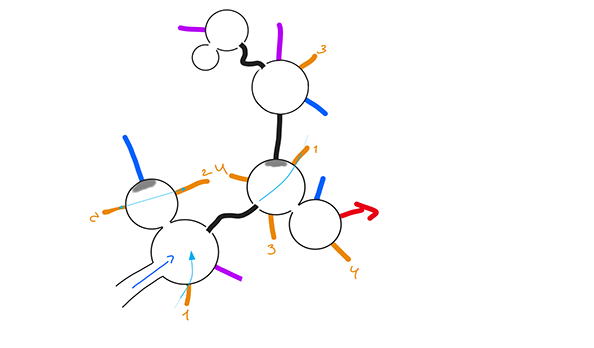
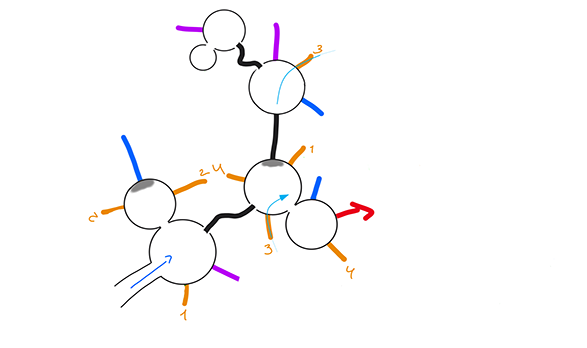
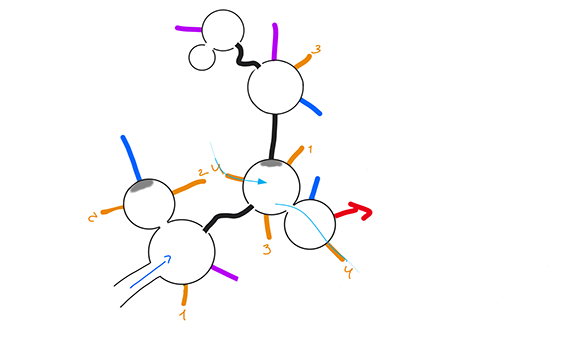

Tunnel leading back to the entrance
Tunnel block by current
Looping tunnels
Maze entrance
smoke plumes / obstructing visibility
Maze exit
As for the quest content, many of the clues are designed to prompt the player to form hypotheses about what happened and to suggest that they will find the answers within the station. Other clues are there to provide hints on how to escape the maze, in other words, to make it clear that there is indeed a door and a lock.
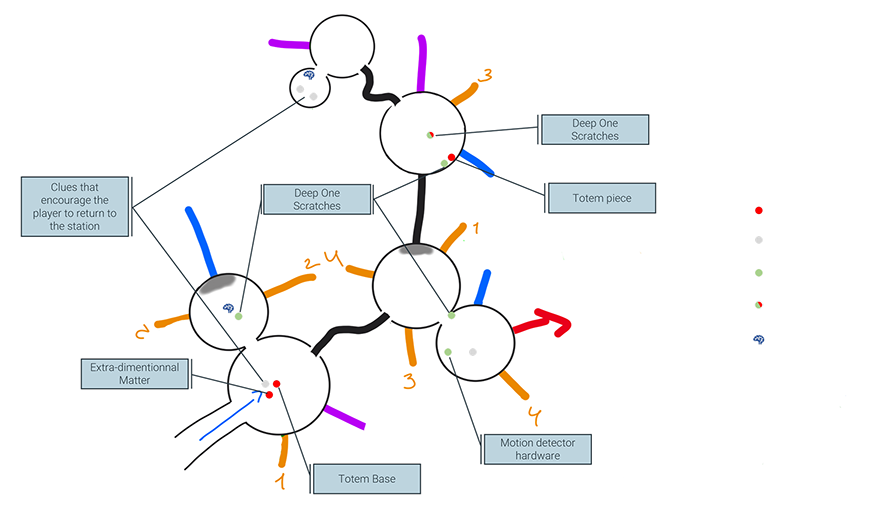
Clues Critical path
Clues Minor
Clues Eureka path
Clues Both Critical and Eureka
Perk & Slot
Blockout and navigation
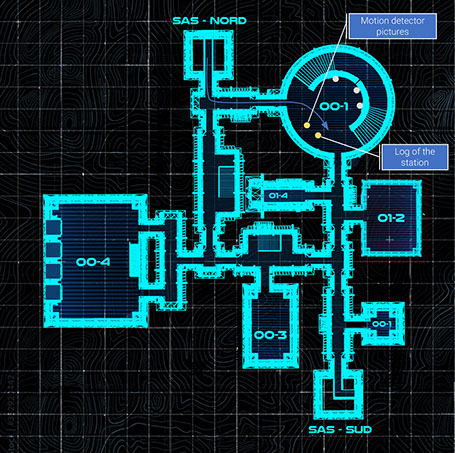
The basic concept I was given by the directors was to design a station made up of modules. Just like the International Space Station, the modules are added bit by bit, following a construction approach suited to an extreme environment.
I also drew inspiration from aircraft carriers and submarines when designing these confined spaces.
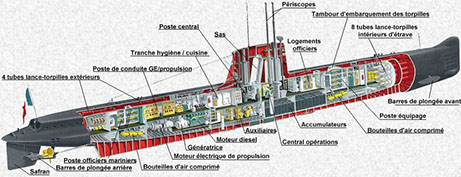
The layout of the rooms is primarily practical, designed to be close to the complex’s various focal points.
I also had to build around a circular room—an iconic space that the directors were determined to keep; it’s both a signature feature and a key element that defines the station’s shape.
The problem is that this type of layout raises a number of issues.
- The layout of the rooms is complicated because it involves creating long corridors connecting various rooms. This isn’t ideal navigation when it comes to a video game. It can easily frustrate the player, especially if they have to go back and forth as an investigative game would require. So I had to limit the length of the corridors as much as possible
- Small hallways consist of one or two rooms connected by a hallway. Perpendicular hallways prevent the creation of additional rooms where there are already one.
- It is important to include a circulation area once again to avoid the frustration of having to go back and forth.
On top of all that, I wanted to incorporate verticality so that the player wouldn't stay on the same plane throughout the level and could clearly see the various elements highlighted by the sonar.

The Excavation
For narrative context, in the introduction: “The Awakening,” Noah, an Ancile agent, accompanied by Elsa, his mentor, and Key, his AI, is searching for missing agent Mei. They discover a portal that they manage to open in order to reach another world. They are attacked by Mei. Noah returns to our reality, while Elsa remains trapped in the other world. We then follow Noah, eight months later, as he searches for the only clue that might help him find Elsa: an underwater station that is no longer responding and which, ultimately, is linked to the opening of the portal and Mei’s disappearance.
Location : An Ocean-I station located at Point Nemo
From : The Awakening: Elsa and Noah are trying to find Mei by figuring out a way to cross a portal that leads to another world
To : The Temple: Noah and Key find a way out of the maze. They enter R’lyeh and head toward Camp Mu, where Ocean-I was conducting experiments.
Difficulty : This is the game’s tutorial level, where players can learn everything they need to solve the case. The focus is on learning. The “critical” solution is fairly obvious, while the “eureka” solution requires players to do more investigating. One is unsafe and the other isn’t, but the case itself remains fairly easy.
Characters : The player interacts only with the AI; otherwise, they will encounter characters who are not present, or dead. There is Andrew Marsh, who sets the quest’s objective; Arif and Anastasia, who guide the player through the two paths that can resolve the investigation; and Terell, who demonstrates the danger of the critical solution.
Player capabilities : The player knows how to use clue analysis, frequency detection, and the sonar that utilizes these features, as well as the game’s basic controls. They will be introduced to aquatic 3C, to sonar as a means of navigating a dark environment, and to Lichen, which allows them to gain energy for analysis; subsequently, they will learn about corruption, but it doesn’t stop there—they will also understand that there are two resolutions for each investigation and, above all, the mental palace, a central element of the investigation.
Ambiance / Flavor : The atmosphere is meant to be oppressive, damp, and oozing. The horror element is emphasized.
Time to finish : approximately 2 hours
My intentions were as follow :
- Create a quest that introduces most of the game's mechanics while featuring a compelling narrative.
- Create an investigation driven by exploration that avoids situations requiring excessive brainload.
- Create a layout giving the player the opportunity to choose how to resolve the investigation with all elements in hand.
- Center the investigation around a strange and violent context thereby fostering a heavy, claustrophobic, and horrifying atmosphere.
- Owner of the game's second level (out of seven). Helping on the first one.
- Owner of mostly the entire onboarding section of the game
- Focused on the investigation gameplay pillar, handling both Level & Quest Design
- Implementing the full quest flow using blueprints in Unreal Engine 5
- Coordinated requests, follow-ups, and integration of all level components, including gameplay elements, specific props, VFX, sound, etc...
- Debugging until Gold.
Work Highlights
First of all, Eliott Hipeau, my lead, has done some work on rationalising quests and how to create them for Cthulhu.
In general terms, the player must encounter an “obstacle” that gives them a goal. This obstacle is underpinned by a “mystery,” which can be resolved through a “conclusive action.” Several “problems” prevent access to the elements needed to carry out one of the conclusive actions.
The player has access to a whole host of clues that help them understand how to tackle the problems, as well as the conclusive actions needed to solve the mystery and remove the obstacle.
The entire level design is based on these guidelines.
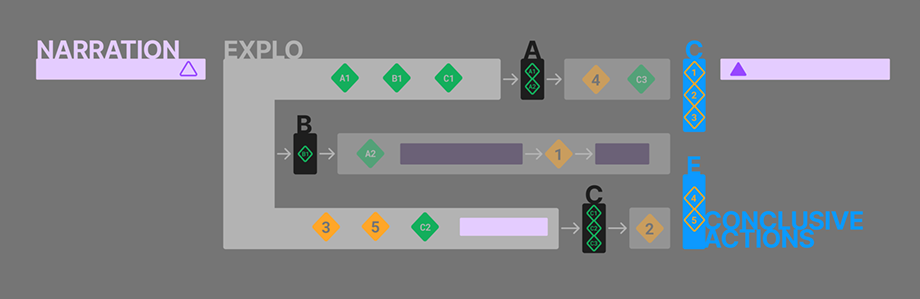


The mystery
The problems
Objective and Obstacle
Conclusive Actions
Clues
Staging
Specifically, in Cthulhu, there are two possible ways to complete quests; these are called the “Critical Path” and the “Eureka Path.”The Critical Path is often the easiest to find, but completing it increases the corruption level.The Eureka Path is harder to find, but, conversely, it cures corruption.
In this quest:
The goal of the Critical Path is to reassemble the artefact, place it on its pedestal, and create a trail of extra-dimensional sap that shows the way out of the maze.
The goal of the Eureka Path is to realize that the Deep One has found his way out of the maze on his own, and that you must follow its tracks using a sample of its mucus.
The mystery is: how did the Ocean-I team navigate the maze?
Because the obstacle is that the maze is non-Euclidean, meaning you can get lost in it forever.
As for the problems:
For the critical path, the player must find the artefact, but to do so, they must open the decontamination chamber using a specific magnetic card
For the eureka path, the player must find a sample of hybrid mucus; to do so, they must first open the transfer module, which is completely submerged and therefore inaccessible. The player must therefore unclog and activate the drainage system.
We’ve reached the final phase.
The maze has been uncovered, and the station is now fully accessible.
From here on, it was important for us to:
- Ensure that the player uses the mechanics introduced appropriately
- Make sure the player clearly understands that there are two paths
- Ensure that the use of the totem seems easy to understand
- But make sure the player understands that it’s a bad idea to use it
- To explore the second way out of the maze
All clues point to three areas:
The artifact and how it works
The danger posed by the artifact
The thing that followed Anastasia into the station, then disappeared back into the maze, leaving traces behind
The level was designed to guide and control exploration along these different paths. These paths were also supported by the functions of the rooms, which made logical sense to include in an underwater station.
Specifically, the artifact components in a laboratory represented the crew’s madness and the totem’s menacing presence in a medical room containing a corpse; the search for items to be sent to the surface in a so-called transfer room; and surveillance equipment and other logs in a control room.
Initially, the player can access the log and monitoring tools, which provide initial clues about the Eureka path. The player needed to be aware of clues that are not directly linked to the pedestal found in the maze.
These clues indicate that the Deep One followed Arif and Anastasia. That it followed Anastasia into the station and that a serious incident occurred in the transfer module. The second important piece of information is that the Deep One returned to where it came from.
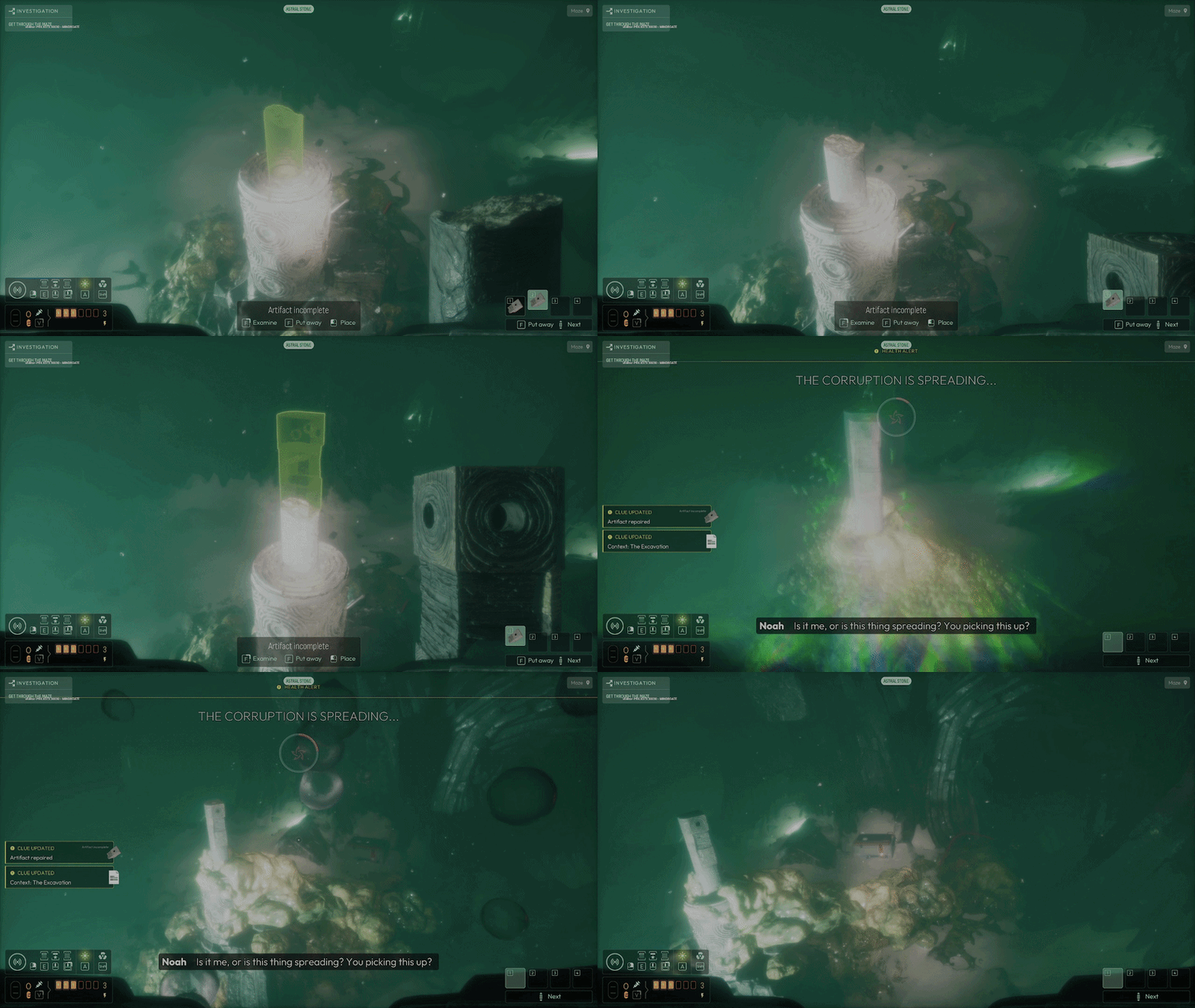
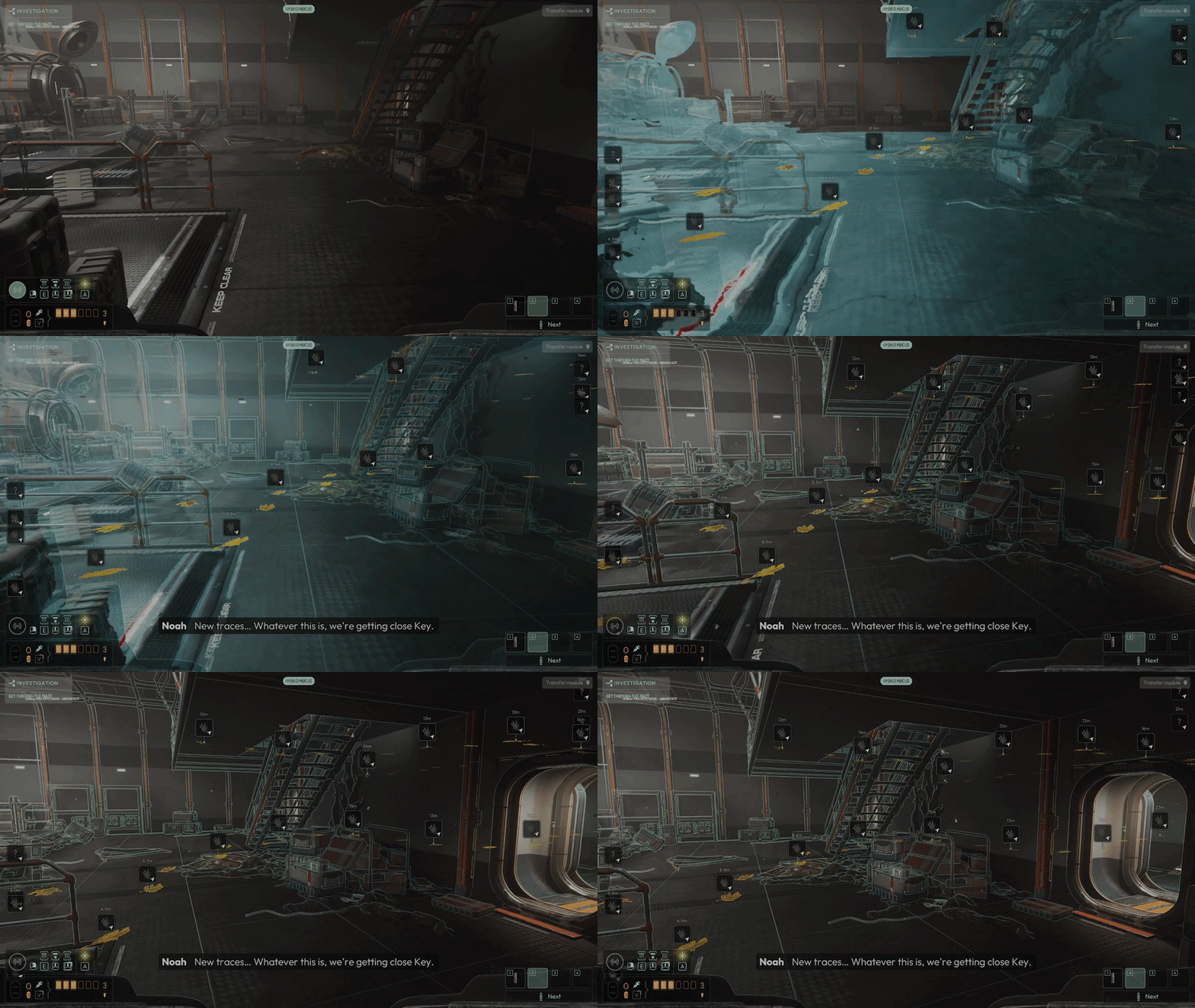
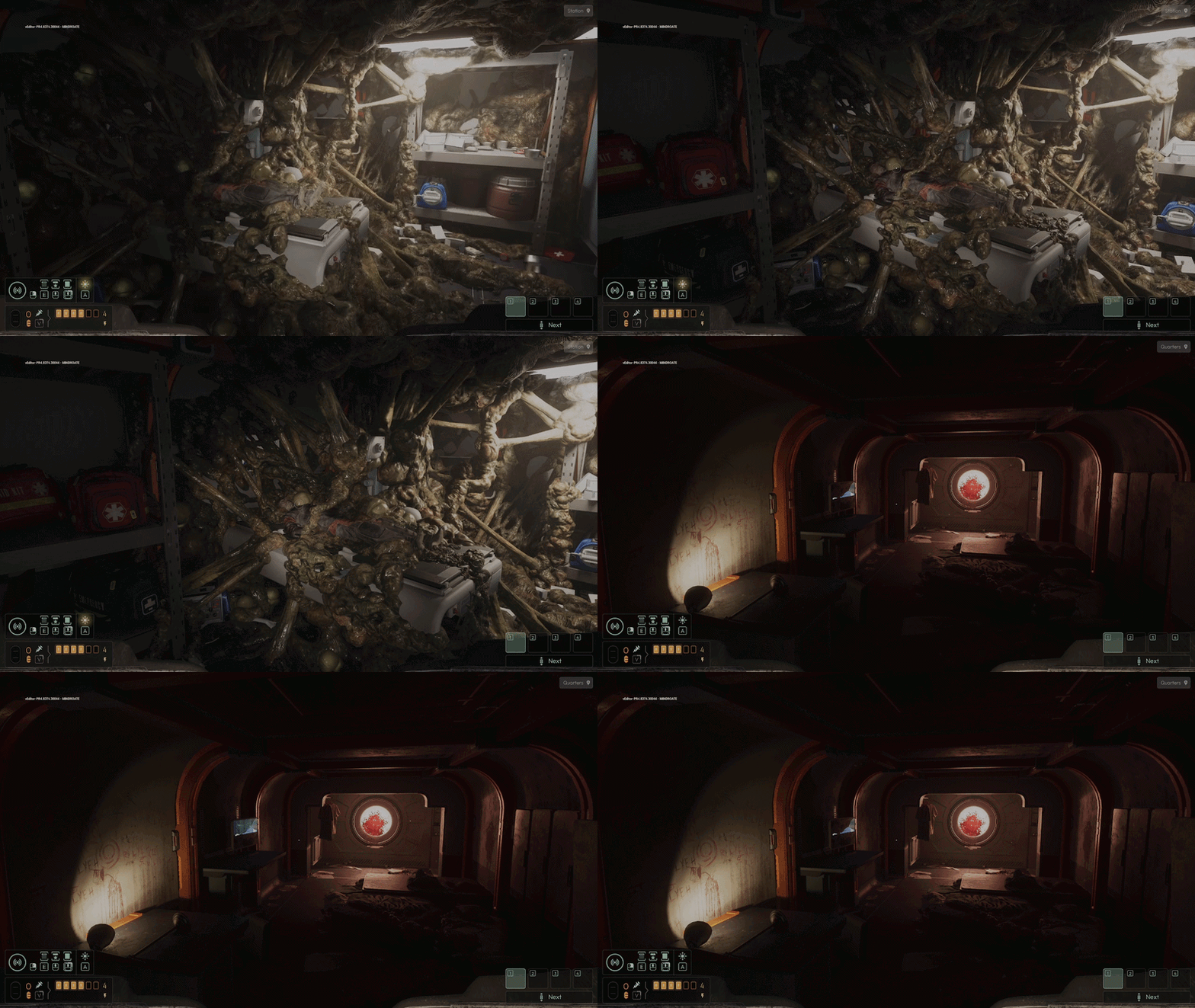
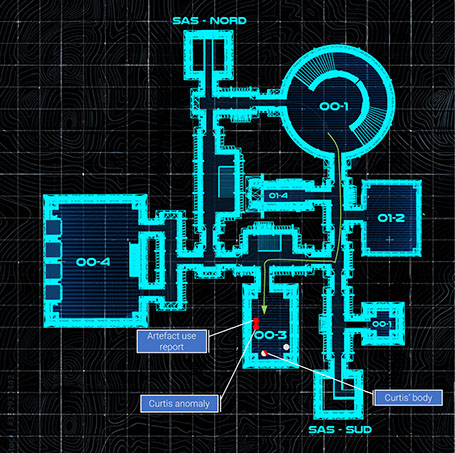
Next, we need to make people understand how dangerous such an artifact can be, so they know how to handle it once they find it. This involves describing various mental health issues of varying severity, with the story of Terell Curtis serving as the most serious and glaring example.
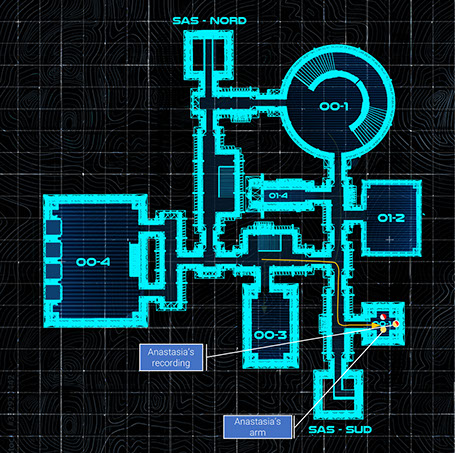
Third, the two hypotheses were confirmed by an audio log found by following a trail of blood.
This audio log depicts Anastasia in distress. We learn that the totem has been broken, that one piece is in the maze near Arif, and the others are in the laboratory. We also learn that the Deep One was in the station, chasing Anastasia.
Finally, provide all the necessary elements in the lab to complete the critical path with the artifact, while also letting the player know there’s something else to do.
That is, they can access the totem pieces and realize they must place them, reconstructed, on their pedestal within the maze.
But they also learn that there is a way to track the Deep One using an invisible mucus that reacts to sonar frequencies. However, to get their hands on a sample, they must access the transfer module.
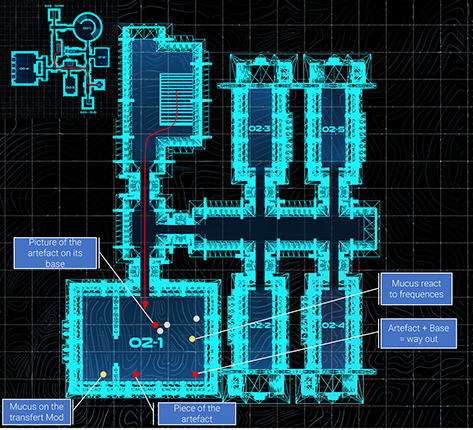
So no matter what happens, the player is very likely to end up in the lab and make a choice:
- Follow the critical path, which seems like the most obvious choice
- Dig a little deeper to understand the other way to navigate the maze: the “eureka” path
The door that was blocked becomes a shortcut back into the maze
If the player chooses the Eureka path, accessing the transfer module becomes their objective and requires a bit more exploration.
It was therefore important to provide some guidance regarding the order in which clues were discovered.
Technical Aspect
Since our team was relatively small, the level designers were responsible for ensuring that everything related to the quest was integrated and functioned properly. Broadly speaking, I had to handle:
- The entire quest flow
-
The tutorials
- Learning the 3Cs of underwater gameplay
- Learning the boost mechanic
- Learning the energy system
- Learning the sonar
- Learning the corruption mechanic
- Learning the concept of dual solutions, known as “Eureka”
-
Game systems, specifically:
- The oxygen tank system
- The drainage system
- The decontamination chamber
- The save system
- Level streaming
- Integrating clues
- Integrating dialogues and the many conditions that come with it
- Integrating cutscenes
- Integrating VFX into the systems
- Integrating Steam achievements
- And lots of failsafes, haha