Assassin's Creed Nexus

Platformer Adventure
Level Designer at Ubisoft Mumbai
Oculus Quest 2
The Challenges
How to manage the ownership position
For now, I can't say much about the project.
It was the first time I collaborated with 4 different studios all around the globe. I mainly worked with Ubisoft Mumbai as an employee but I worked remotely from France.
The production was split in different parts, Mumbai had the ownership on a specific part of the game. This part included different types of experiences, I was the owner of one of these experiences.
According to these, we had dependencies with the other studios.
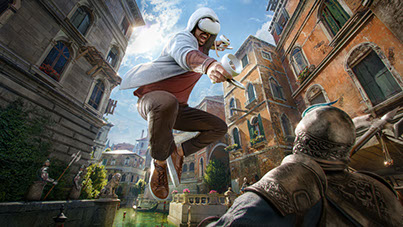
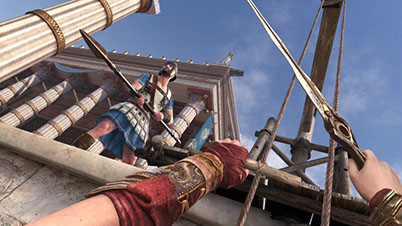
I was fortunate on my end to not have as many dependencies. I was completely free to create whatever I wanted, according to the main rules that we designed for the experience and the constraint of the project. I was able to prototype different ideas with the visual scripting tools created for this project.
I was able to design and implement 4 different levels and my ownership forced me to create these levels from scratch to shippable quality.
I had the chance to focus on many level design notions and adapted my processes for VR.
When designing the levels, I explored various micro-workshops to align with the guidelines inherent to the “Assassin’s Spree” mode.
The fantasy that most closely resembled the concept of an “assassin's spree” was “Jungle gym” or “Chase Tag.” Parkour is one of the pillars of the game, just as it has always been in Assassin's Creed.
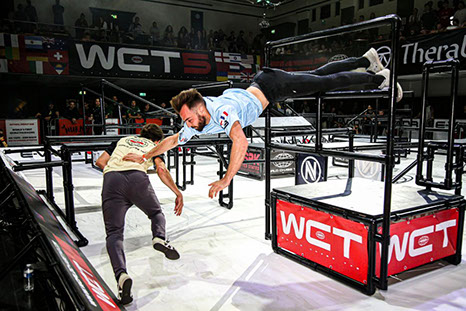
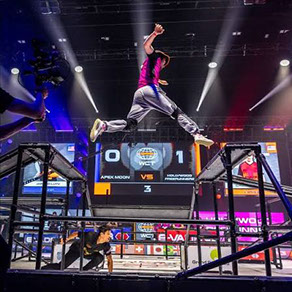
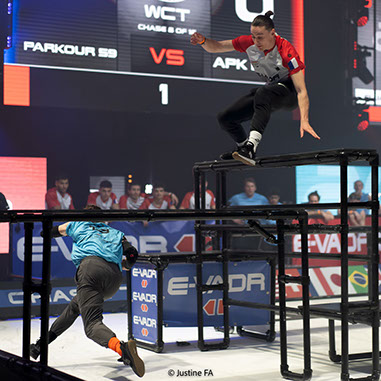
I then grouped these micro-workshops by theme, with the goal of approaching the levels from different perspectives.
- A lot of verticality
- Focus on symmetry
- The “jungle gym” fantasy
- Playing with the line of sight to the extreme
The Jungle gym fantasy
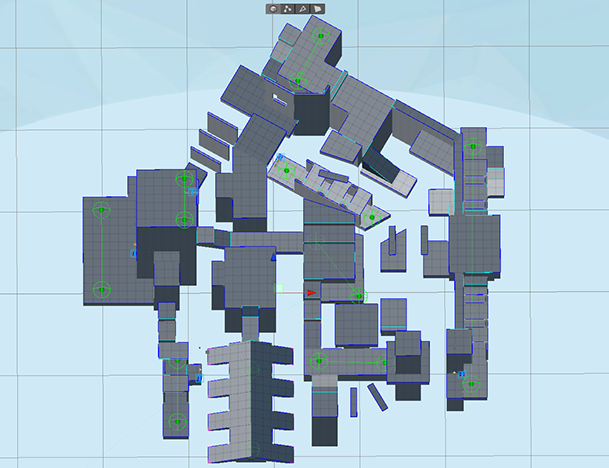
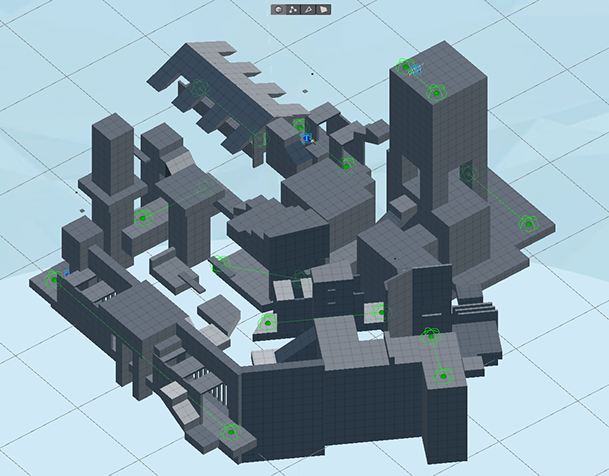
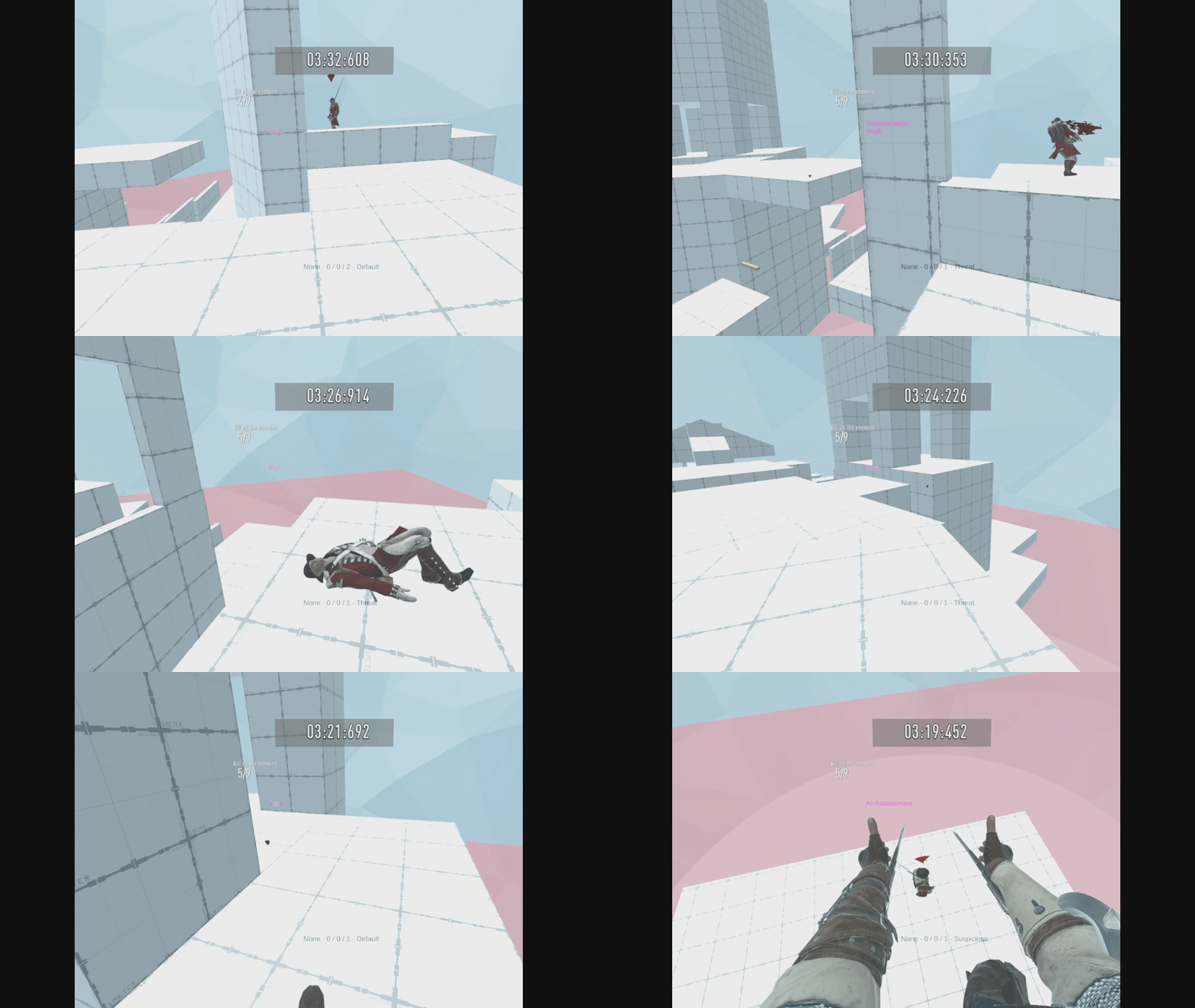
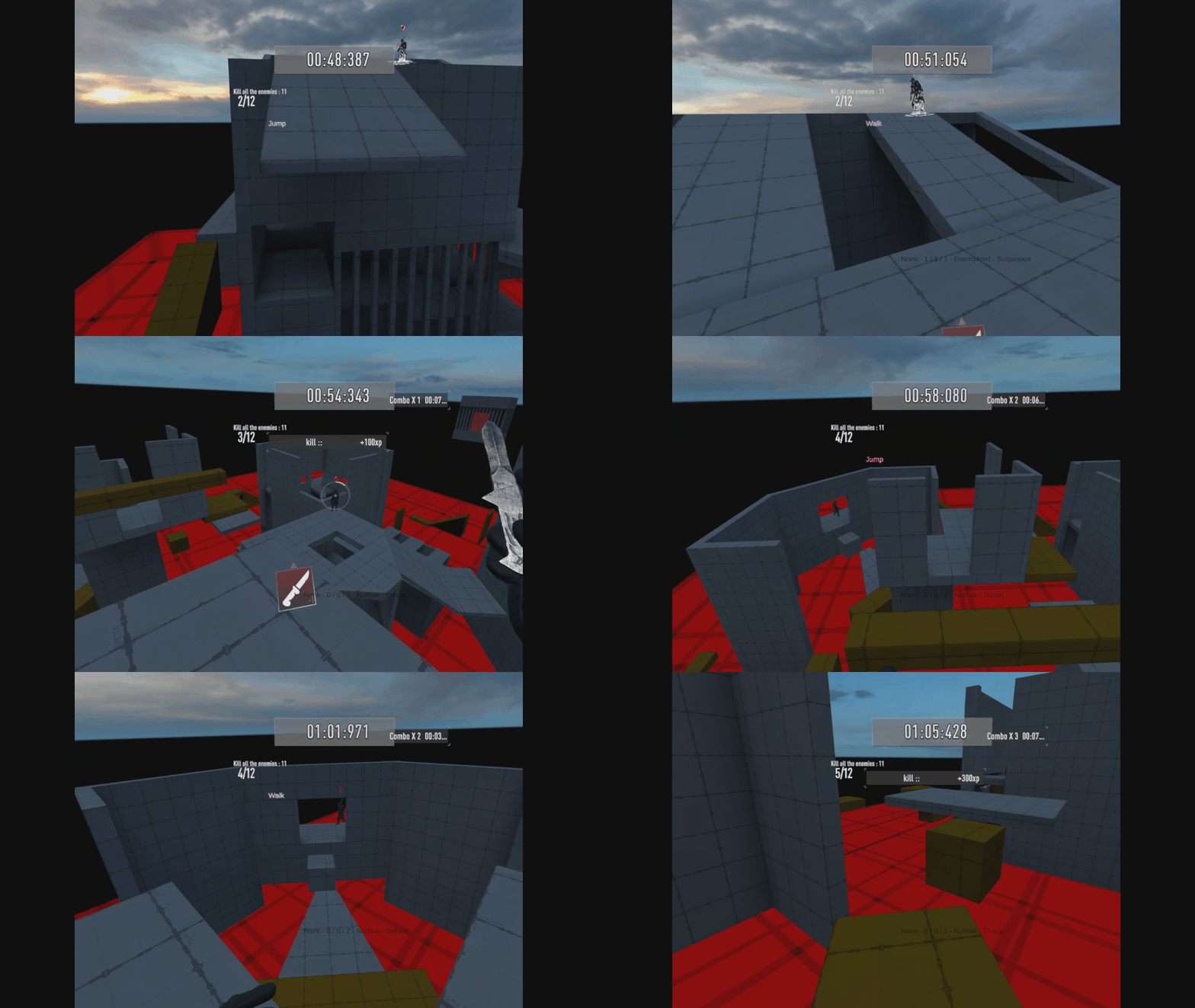
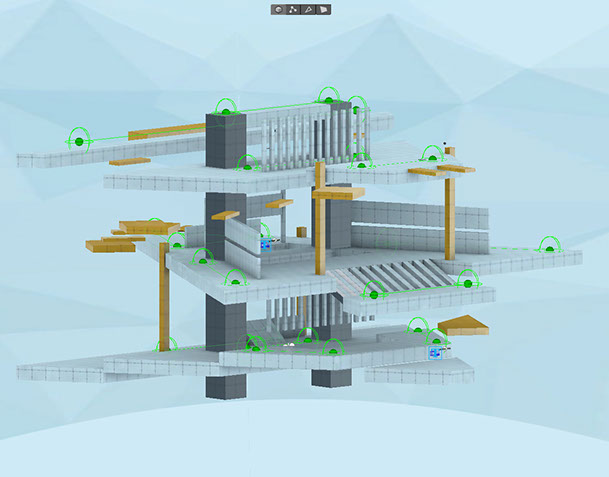
Here, the intended experience is to enhance the player’s parkour and long shoot skills. The player is supposed to feel pressure by the timer constraint. He has to optimize his placements and his shots to reach the perfect line of sight and kill the enemies in one run. That was my first level, and the one that best embodied the fantasy. It served as the model for all the other levels.
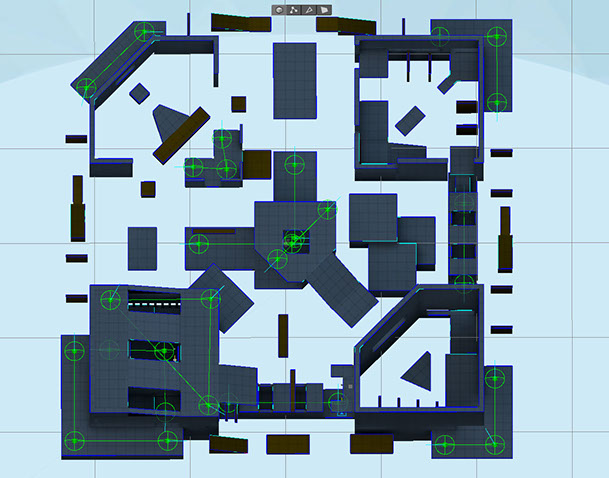
The green dots are the enemies patrols.
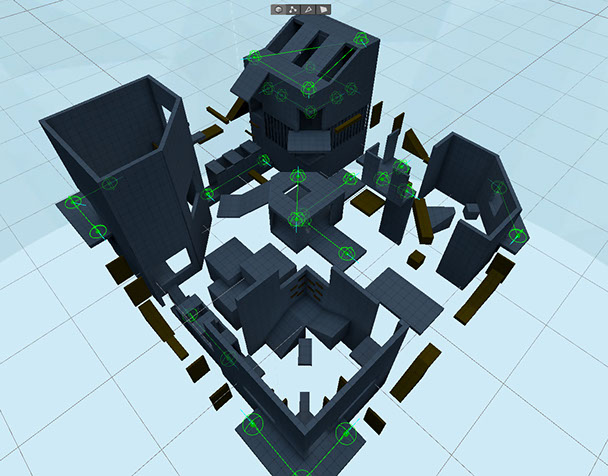
Introduction and symmetry - The square
It serves as an easier introduction level so that players can get a good understanding of the game mode.
The intended experience is to introduce the player into fast paced parkour and kills.
This level is built to understand quickly the paths that the player can use, for example: go around the level or take a short-cut by the middle, with a kind of symmetry and different shapes as landscapes.
Verticality - The triangle
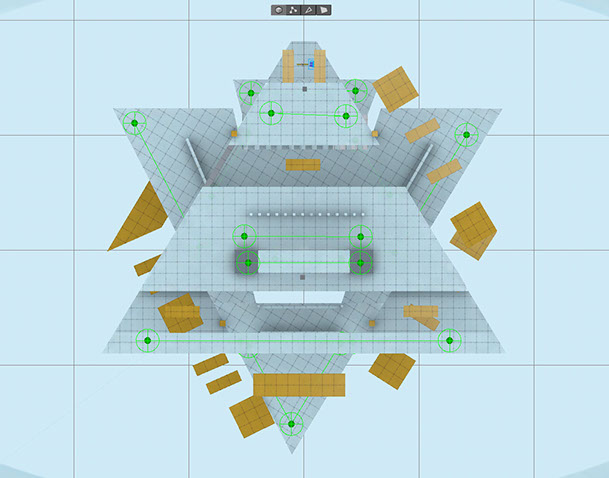
Here, the intended experience is to use a lot of verticality. To reach the different floors, the player needs good parkour and especially climbing skills to navigate. In this level, the sightlines are way more verticals than usual.
An element of danger is added. A red zone that moves up and down to force the player to anticipate their movements and optimize them in accordance with the game mode’s mechanics. The goal is to increase and vary the challenge. Navigation is from top to bottom.
Line of sight - The Forest
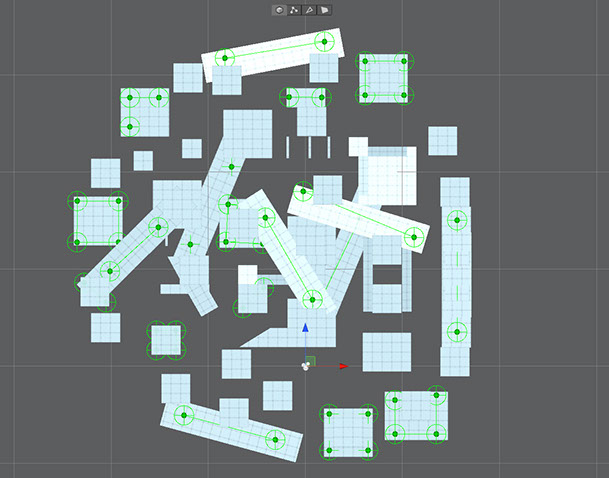
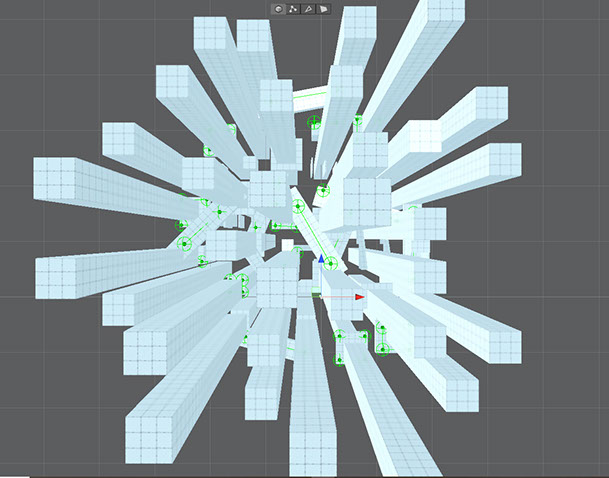
The intention in this level is to block the sightlines. In this case the player needs to move around to find the right sightline and kill the enemies.
There is a more pronounced circular navigation pattern, since the vertical layout forces me to create a loop in which the player can move forward or backward.

- Remote collaborating with Mumbai and the other studios : Reflections, Blue Byte and Redstorm
- Owner of a specific game mode
- Designing levels for this mode and implementing them entirely into the Engine
- Helping to design the macro-structure of the system owned by Mumbai
- Helping on mission design to reach deadlines
Work Highlights

Assassin's spree
The only thing my lead had told me was the basic premise of the game mode: The player must kill as many guards as possible, one after an another, within a set time limit, and different types of weapons can be provided at the start or picked up from the guards.
With that, I had the freedom to interpret the concept however I wanted. First, I had to research the challenges of the “Assassin’s Spree” mode. Assassin’s Spree is a mode focused on fast paced kills and parkour challenges. The player needs to go really fast to reach the better score. In a level design perceptive, it is similar to a sandbox where the player can go everywhere he wants and experiment his parkour skills.
From my research, I identified four main principles:
Navigation : Reach every part of the level without difficulty in record time. Players shouldn't feel like they're being slowed down or that their movement is interrupted in any way.
Line of sight : Having to move around in the game and physically move in VR to get the right shooting angle or positioning.
Variation in enemy positioning: Allow the player to analyze the situation at a glance and plan the optimal path between each enemies to gain time.


Variations on parkour elements: The goal was to make it fun to navigate the level and experiment with different ways to do so, like on a jungle gym.

For each level, my responsabilities were:
- Define an intention according to the challenge I felt relevant
- Paper prototypes
- Blockout – Flow and lines of sight
- Enemies management (Waves, placements and patrols)
- Parkour setups
- Create the level and mission logic with a visual scripting tool
- Define player Inventory constraints
Benoît Cassin
©BenoitCassin2026